Reviewed & updated by M. Hameez·
Updated
Originally published
Keeping track of your work orders can be challenging. From a process perspective, work orders are a foundational element that allows the field service industry to operate efficiently. They are crucial for managing expectations and preventing misunderstandings about the work to be completed.
Getting work orders right is essential. Having a proper tracking process in place helps keep both your customers and field teams satisfied. A work order tracker can help streamline this process.
What is a Work Order Tracker?
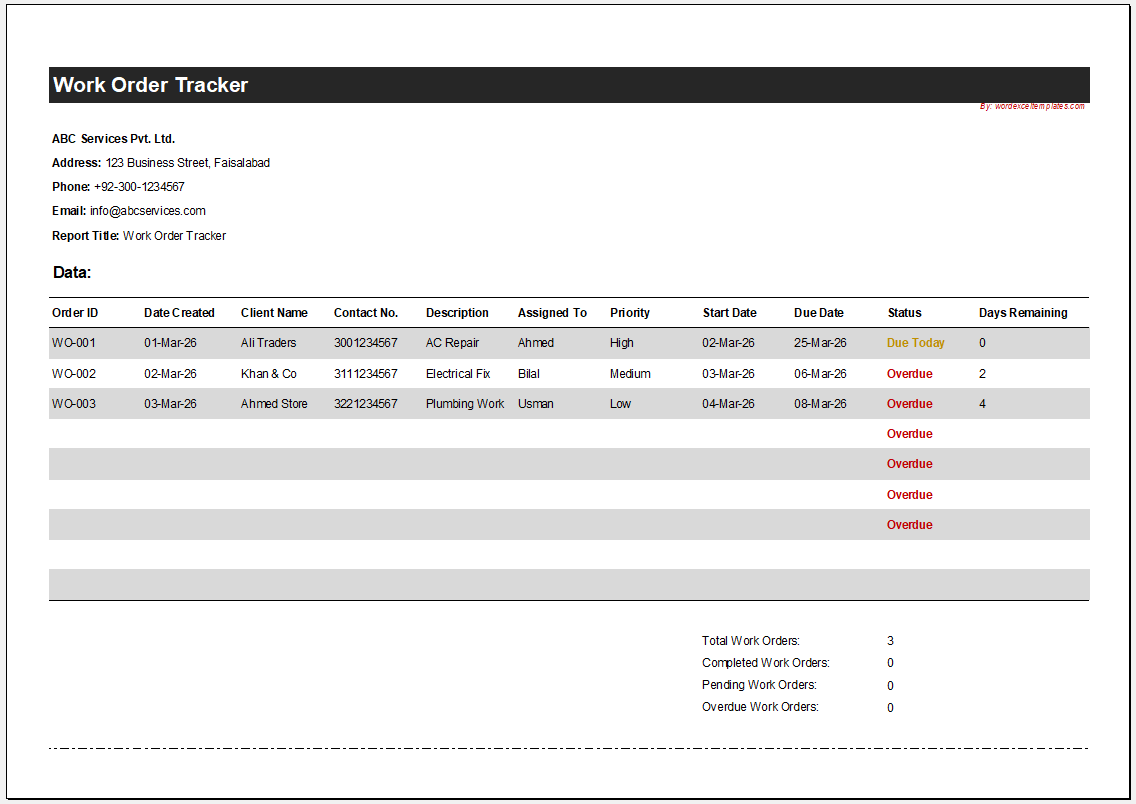
Work order management refers to the process of creating, assigning, and tracking work orders. A work order tracker helps a company ensure that tasks are completed on time and carried out efficiently. It provides a systematic way to monitor the progress of each assignment.
(Create a work order tracker for your business.)
Work Order Tracker
Tracker Setup
Work Order Records
Follow-Up & Management Notes
Tracker Snapshot
Work Order Tracker
DEPARTMENT
REPORTING PERIOD
SUPERVISOR
LOCATION
PREPARED BY
Total Orders
Open / Active
Completed
Overdue
Cost Variance
Work Order Schedule
WO # / Date
Requester / Job
Assigned To
Priority
Due
Status
Est. Cost
Actual
Variance
Follow-Up
Management Notes
FOLLOW-UP
MATERIALS / RESOURCES
SUPERVISOR NOTES
Work Order Tracker
What Does a Work Order Tracker Do?
A work order tracker allows you to:
Monitor the status of all tasks, whether pending, in progress, or completed.
Identify tasks that are overdue or require immediate attention.
Improve accountability and efficiency by clearly showing which assignments need follow-up.
How to Create a Work Order Tracker
To create an effective work order tracker, consider the following guidelines:
Professional Layout
Use a clean and professional design. Include a clear heading, such as “Work Order Tracker,” so readers immediately understand its purpose.
Create a Table
Organize your work order details in a table format. Key columns should include:
Order Number: A unique identifier for each work order.
Start Date and Due Date: Dates that help track timelines and deadlines.
Status: The current stage of the work order, such as New, In Progress, Completed, or On Hold.
Description: A brief summary of the work order.
Client Name and Contact Details: The client’s name, phone number, and email address.
Assigned Employee(s): The staff responsible for completing the task.
Priority Level: High, Medium, or Low, depending on urgency.
Comments: Space for notes or additional information relevant to the task.
Costs and Hours Worked: Details of material costs, labor costs, and time spent on the job, if financial tracking is required.
Importance of a Work Order Tracker
A work order tracker is invaluable for managing workflow. It allows you to see:
Which tasks are completed.
Which tasks are in progress.
Which tasks are upcoming.
Additionally, a tracker can help monitor costs associated with each job, including materials, labor, and hours worked. This supports accurate billing and helps determine the profitability of each work order.
Using a work order tracker also enhances customer satisfaction. Complete and organized records help you confirm that clients receive the services they requested. If issues arise, you can address them promptly.
Ultimately, a well-designed work order tracker provides a comprehensive overview of all tasks, enabling your company to manage operations efficiently, reduce errors, and maintain strong client relationships.
Free Work Order Tracker Template to Streamline Your Business
To make this process even easier, we have created a free Work Order Tracker Template designed to help you streamline your business operations. This ready-to-use template includes essential fields such as order numbers, start and due dates, task status, client details, assigned employees, priority levels, and a comments section. These fields allow you to start organizing and tracking work orders quickly.
By using our template, you can:
Keep all work orders organized in one place.
Monitor progress and deadlines efficiently.
Improve accountability among your field teams.
Record costs, materials, and labor by adding the relevant fields, if needed.
Support timely service delivery and improve customer satisfaction.
Download the template now and simplify the way your company manages its work orders. With a structured approach, you can save time, reduce errors, and focus on growing your business.
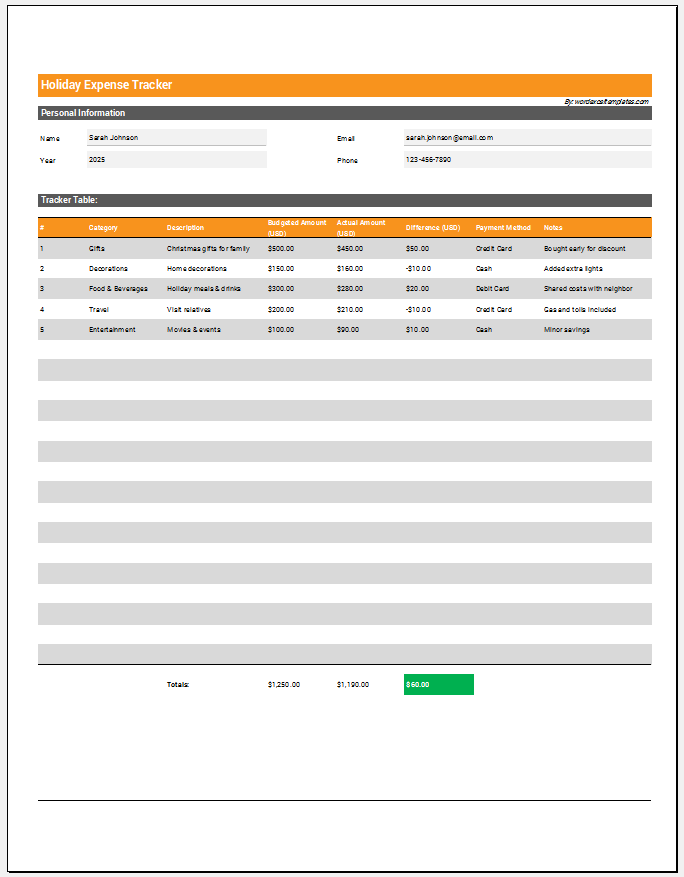
The holiday season lets one relax and enjoy time with their loved ones. It lets one unwind and be ready for work or school. However, holidays can end up being stressful if one spends too much money or does not track how much money they are spending. Holidays can only be enjoyed if you know […]
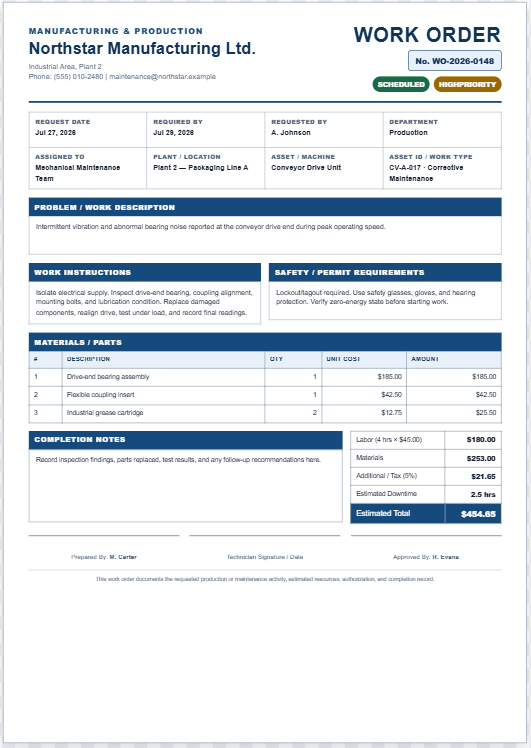
A Work Order Generator is a practical tool that helps organizations create professional work orders quickly and consistently. It is designed to document maintenance, repair, production, inspection, installation, or service tasks in a standardized format. Instead of preparing work orders manually, users can enter project details into the form and instantly generate a clean, print-ready […]
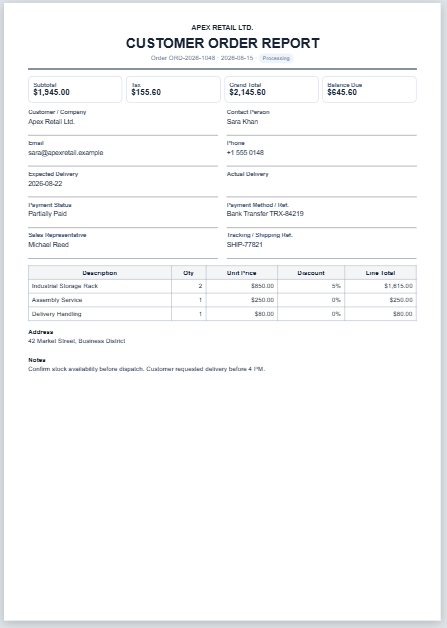
A customer order tracker provides a central record of an order as it moves from initial entry through payment, fulfillment, shipment, and delivery. Keeping these details together can make it easier to check what was ordered, what has been paid, what still needs to be fulfilled, and which orders require follow-up. Use the Customer Order […]
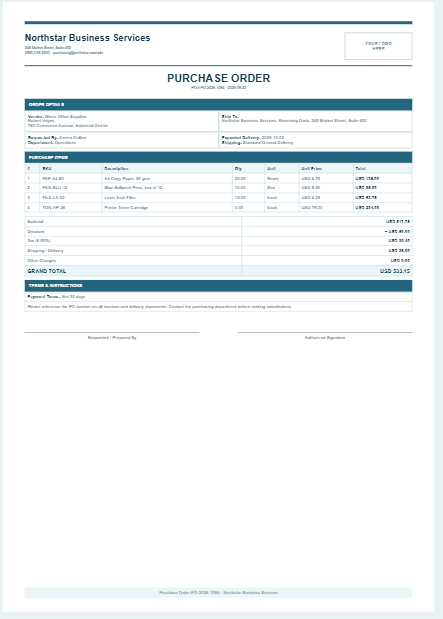
A purchase order is a document used by a buyer to formally request products or services from a seller. It outlines what is being ordered, in what quantity, at what price, and under what terms. In today’s digital business environment, companies are increasingly moving away from manually prepared documents and embracing online solutions that simplify […]
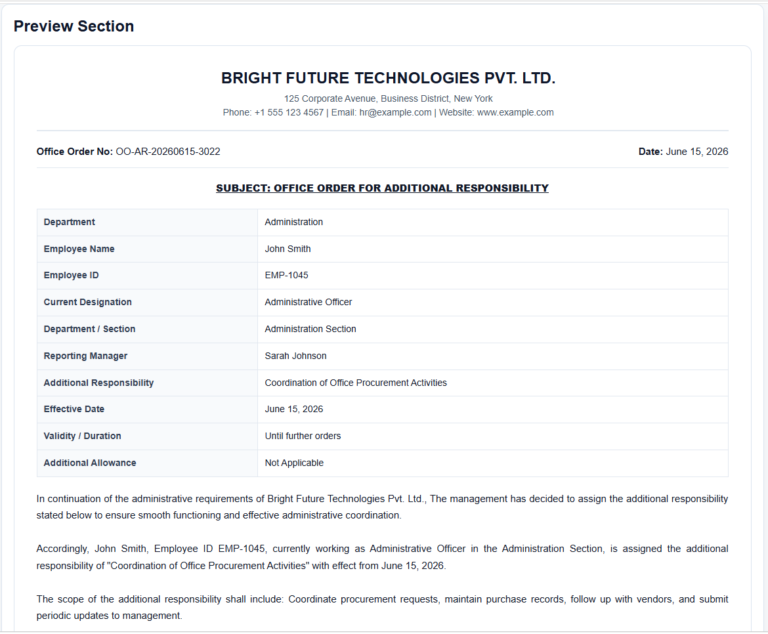
Organizations often encounter situations where existing employees need to take on additional duties to support operational requirements, temporary staffing shortages, special projects, or organizational restructuring. To communicate these changes professionally, companies issue an Office Order to Employee for Additional Responsibility. To simplify this process, we now offer an online Office Order to Employee for Additional […]
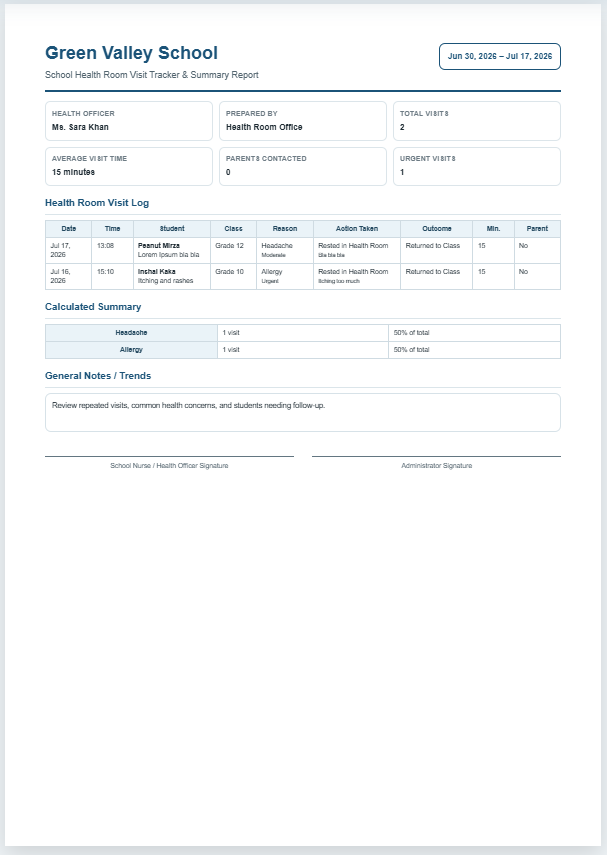
The School Health Room Visit Tracker & Calculator is a helpful tool that helps schools record, organize, and analyze student visits to the health room. Whether a student has a minor injury, headache, fever, stomachache, or needs first aid, this calculator makes it easy to maintain accurate records in one place. School nurses, health officers, […]
Many organizations or individuals carry out volunteer work. This includes freely chosen work that is unpaid. It is done voluntarily and includes a person or group giving time that often benefits the community or a certain cause. It is important to organize volunteer work hours carefully so that everything can be planned and organized. A […]
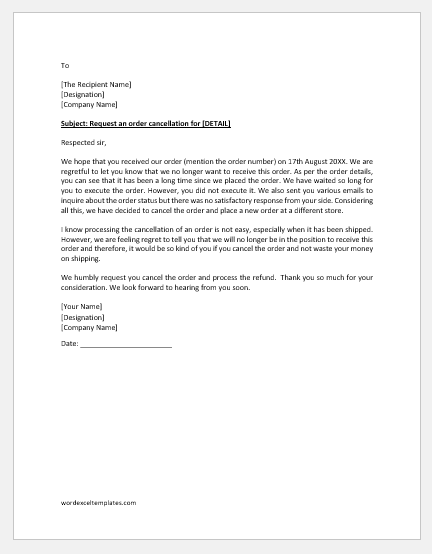
We often write letters to sellers to request that they cancel an order. An order cancellation letter is a formal communication that should state its purpose clearly and concisely. There are numerous situations in which we may need to request the cancellation of an order. For example, we may realize that we have ordered the […]
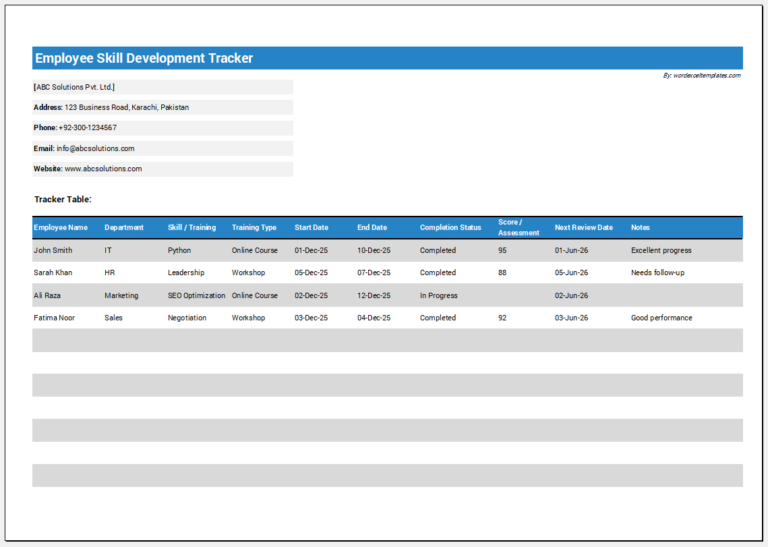
It is important for employees to continuously improve their skills so they can advance in their careers. We need to know the latest techniques and processes related to our field to prosper. A company may train employees to enhance their skills and support the company, or an employee may pursue different certifications. It is important […]
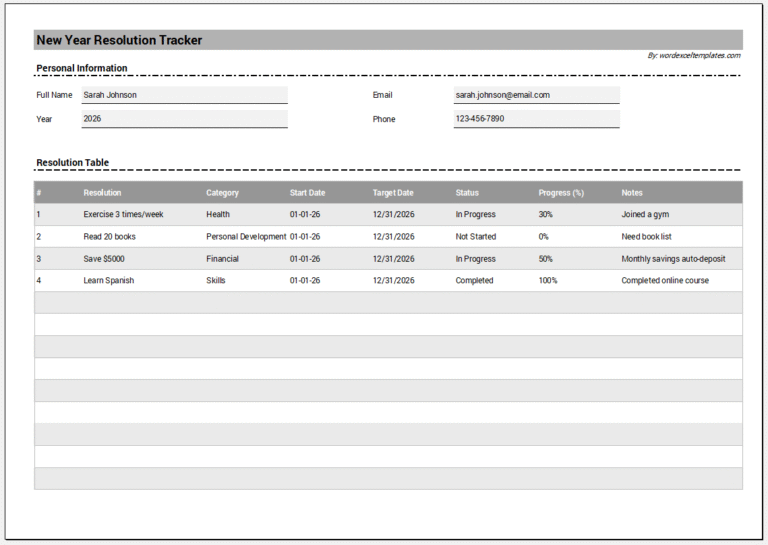
Many individuals like to make New Year’s resolutions. These are usually personal goals that one sets at the beginning of a new year. They help individuals improve themselves. When making these resolutions, it is helpful to reflect on the past year and identify goals that can help you grow in different areas of life. These […]