Reviewed & updated by M. Hameez·
Updated
Originally published
A cash receipt is a printed or electronic document acknowledging payment received during a transaction. Usually, the seller retains a copy and gives the original receipt to the customer.
Accurate records of costs, sales, and incoming payments help a business monitor its financial position. Cash receipts document payments received from customers and other sources. Depending on the business, payment methods may include cash, credit cards, checks, wire transfers, and money orders.
The company’s accountant records incoming payments in a cash receipts journal. This journal keeps track of money received by the business. The accounting entry depends on the transaction. For a cash sale, the cash account is debited and the sales account is credited. For payment of an outstanding customer invoice, the cash account is debited and accounts receivable is credited.
Receipts may be grouped into three categories:
Payments from cash sales.
Payments from credit customers.
Payments from other sources.
A daily cash reconciliation record tracks money received and paid out. Cash receipts should be recorded promptly, and deposits should follow the company’s procedures. Any shortage or overage should be investigated and resolved.
(Create a cash receipt using the tool given below.)
Cash Receipt Generator
Business & Receipt Details
Payer & Payment Information
Cash Payment Entries
Amounts & Acknowledgment
Receipt Summary
CASH RECEIPT
RECEIVED FROM
PAYMENT DETAILS
Cash Payment Details
Description
Cash Amount
Subtotal
Tax
Discount
Total Cash Received
Outstanding Balance
Amount in Words
Acknowledgment
Received By:
Authorized Signature / Stamp
Types of Cash Receipts
The format of a cash receipt depends on how the payment is collected and recorded. Three common formats are:
Electronic Payment Receipts: These are generated electronically by payment systems or online platforms. They typically show the payment amount, transaction date, reference number, and payment method.
Cash Register Receipts: A cash register or point-of-sale system generates a printed or electronic receipt for a purchase. These systems may operate independently or connect to a wider sales and accounting network.
Manual Cash Receipts: A manual cash receipt is prepared by hand and must be completed carefully. Receipt books may produce multiple copies: one for the customer, one for accounting, and one retained in the book. Copy colors and distribution arrangements vary by organization.
Uses of Cash Receipts
Cash receipts are useful for several purposes:
Supporting accounting records of sales and payments.
Providing evidence of a purchase or payment.
Supporting returns or exchanges, subject to the seller’s policy.
Supporting warranty claims where proof of purchase is required.
Providing documentation for audits and financial reviews.
Supporting tax records and applicable deduction claims.
Helping businesses track incoming funds and reconcile their accounts.
Providing customers with a record of the amount paid and the payment method used.
Who Uses Cash Receipts?
Businesses of many types use cash receipts to document payments. Accountants use them to maintain transaction records and reconcile incoming funds. Cash collection information also supports budgeting, cash flow monitoring, and financial reporting.
Receiving a payment increases the business’s cash balance, but it does not always represent new sales revenue. For example, collecting payment for an earlier credit sale reduces the customer’s outstanding balance.
Cash Collection Process
An organization may centralize cash collection or allow individual branches to receive and deposit payments. The process depends on its structure and internal procedures.
Typical steps include:
Receive payment from the customer.
Issue a receipt and record the payment details.
Identify the invoice or transaction associated with the payment.
Deposit funds into the appropriate bank account.
Reconcile recorded receipts and deposits with bank activity.
Post the payment to the relevant accounting records.
Investigate and resolve any discrepancies.
When payments are collected over the counter or in the field, a sequentially numbered receipt helps maintain a clear record. The receipt should also state the payment method, such as cash, bank draft, or check.
The accounting department should retain receipt records and related deposit documentation as supporting evidence of the transactions.
Templates
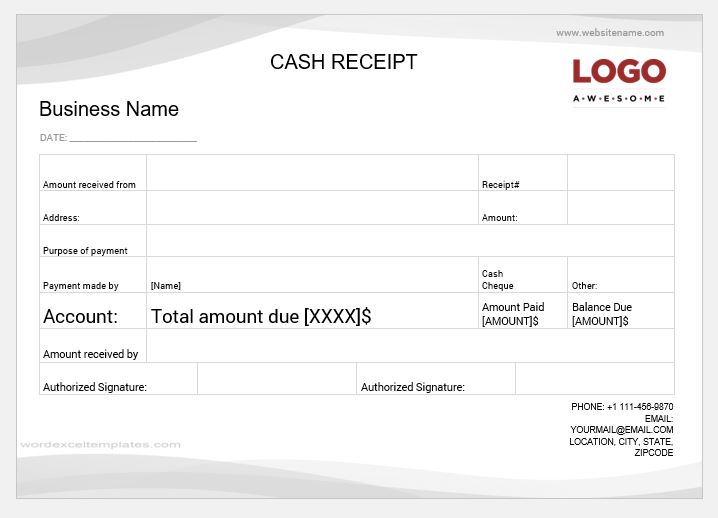
A cash receipt typically includes:
Seller’s name and contact details.
Date of the transaction.
A unique receipt number.
Customer’s name, where applicable.
Description of the payment or related invoice number.
Amount received and currency.
Payment method.
Outstanding balance, if applicable.
Signature or acknowledgement of the person receiving payment, where required.
#1
Payment Receipt: A general receipt confirms any payment, such as utility bills or loan payments.
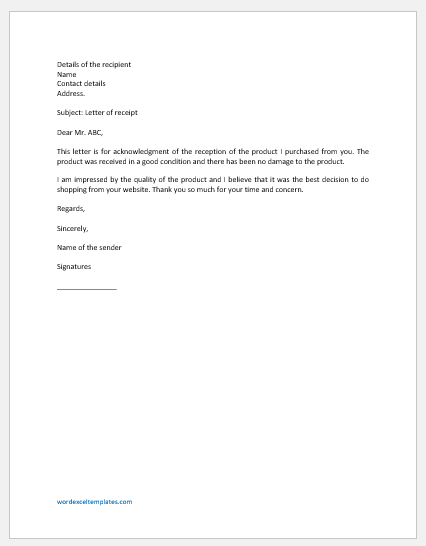
A letter of receipt, also known as an acknowledgment letter, is a formal communication confirming that a document, payment, product, package, or other item has been received. Unlike a traditional payment receipt, which primarily serves as evidence of a financial transaction, a letter of receipt can acknowledge many different types of deliveries or submissions. Such […]
International shipping and international business operations have many rules and regulations attached to them. This is so that businesses follow procedures for the safe delivery of goods and also so that nothing illegal occurs during shipping and other international business activities. If you own a business that ships goods, it is important to find out […]
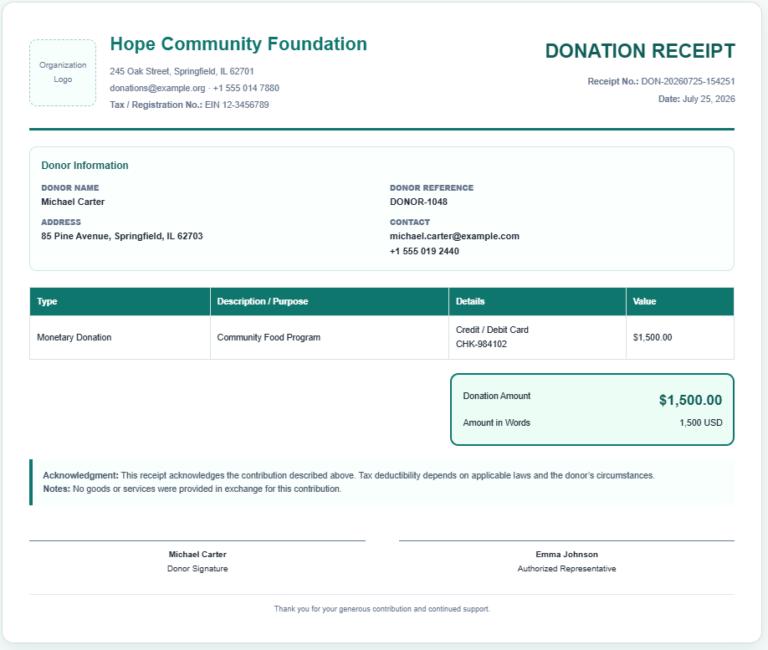
A Donation Receipt Generator helps organizations prepare a written acknowledgment of money or property received from a donor. It provides fields for recording organization details, donor information, the donation date, receipt number, purpose of the contribution, and other relevant information. The generator below supports both monetary and in-kind donations. For monetary donations, you can record […]
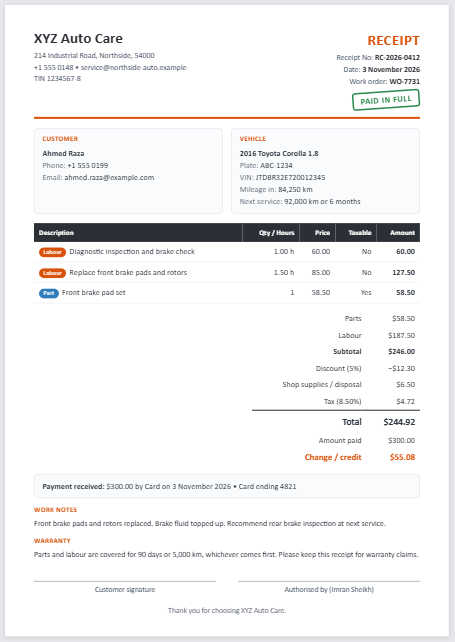
Maintenance of a vehicle is an essential task that every vehicle owner must perform. It keeps the car in good condition so that users can enjoy the best journey. Having the vehicle serviced regularly prevents many mishaps. A service also keeps track of the engine and other parts of the car so that timely replacement […]
Business is about earning money and making a profit. You make your deals attractive to get good pay. Besides gains and losses, business is also another name for management. In every walk of life, being organized is praised, and it is the best way to promote your business. Business receipts are designed for exactly this […]
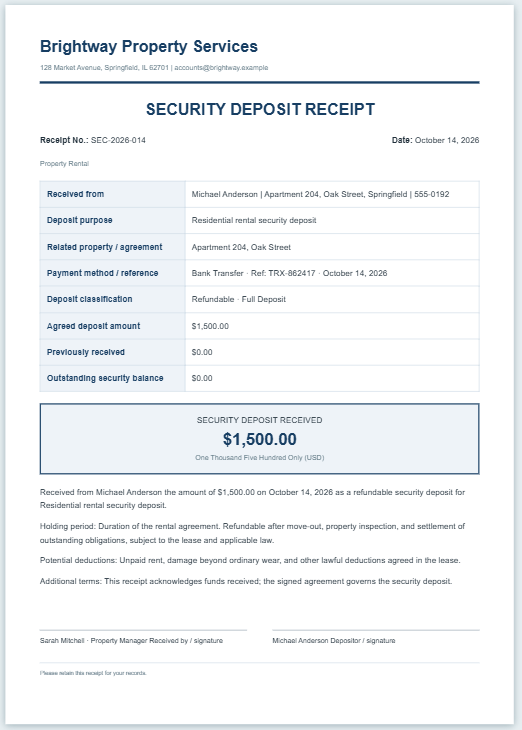
A security deposit receipt is a printed or electronic acknowledgment that a deposit has been received. It is typically issued by a landlord to a tenant when a security deposit is paid under a rental agreement. A security deposit differs from a purchase down payment or reservation payment, which should be documented according to the […]
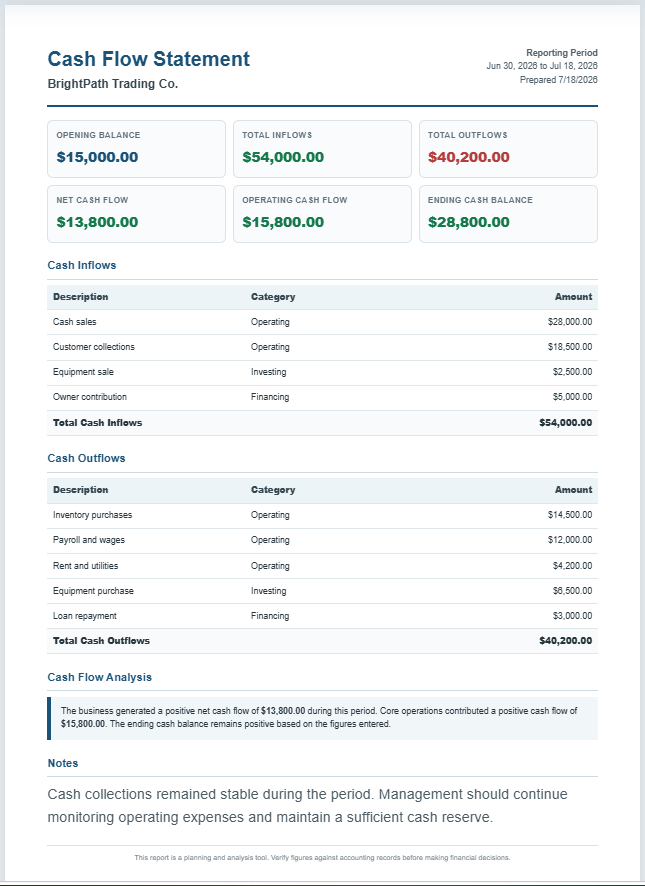
A Cash Flow Calculator is an online financial tool that helps you monitor the movement of cash into and out of your business over a selected period. It automatically calculates total cash inflows, total cash outflows, net cash flow, operating cash flow, and the ending cash balance. Whether you run a small business, startup, retail […]
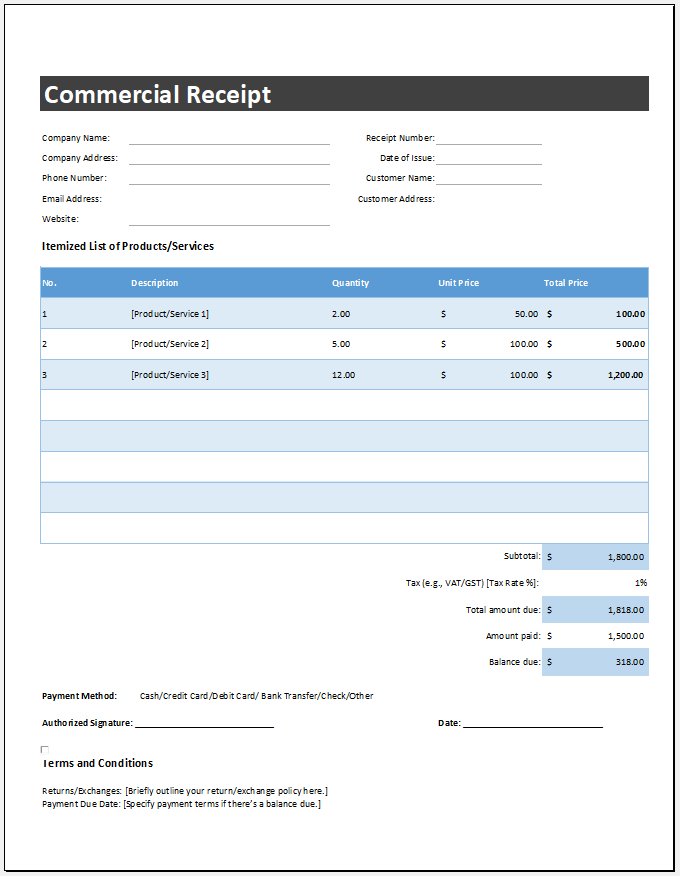
What is a payment receipt? When making a purchase, buyers are often interested in the price of a product. When the buyer receives a price and total bill for their purchase, it is known as an invoice. When the payment is made, the buyer receives a payment receipt. A payment receipt is a proof that […]
Petty cash is the amount that a company pays to its employees after anticipating the future needs of making payments on behalf of the company. If an employee runs out of this cash and he immediately needs money, he spends money from his pocket and then asks the company to reimburse the petty cash. How […]