When employees are given opportunities to learn and develop new skills, their competencies improve, and they also experience higher job satisfaction. In turn, organizations benefit from a more skilled and productive workforce. For this reason, many companies invest in structured training programs to ensure their employees are well-prepared for their daily responsibilities and future challenges.
A well-planned training system not only improves performance but also supports long-term organizational growth, efficiency, and competitiveness.
What is an Employee Training Checklist?
An employee training checklist is a document used to ensure that employees receive all the necessary training required to perform their job roles effectively. It helps employers organize, track, and manage training activities in a systematic way.
This checklist is an essential tool for organizations that want to maintain a skilled and well-trained workforce. It ensures that employees stay updated with the latest knowledge, tools, and practices relevant to their roles, ultimately contributing to the overall development and success of the company.
What Can Employees Expect from a Training Checklist?
An employee training checklist provides a clear overview of all training-related activities assigned to an employee. It serves as a guide for both employees and management to track progress and ensure that all required training is completed on time.
Employees can use this checklist to:
- Understand the training programs they need to complete
- Track their learning progress
- Identify required skills for career development
- Stay aligned with organizational goals
This structured approach helps employees become more skilled and confident in their roles, allowing them to contribute more effectively to the organization’s success.
What to Include in an Employee Training Checklist?
There is no fixed format for a training checklist. It can be simple or detailed depending on the organization’s needs. However, a well-designed checklist usually includes the following key components:
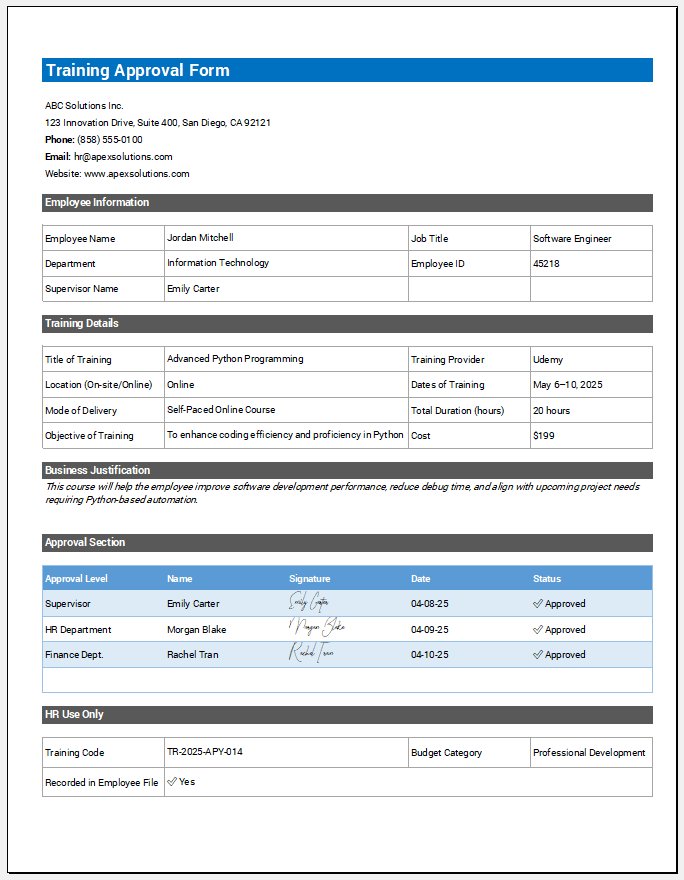
1. Employee Information: Each checklist is typically created for an individual employee. It includes basic details such as:
- Employee name
- Employee ID
- Department or job role
- Supervisor or trainer name
This ensures proper identification and tracking of training records.
2. Details of Training Programs: This section lists all training programs assigned to the employee. These may include:
- Mandatory training programs (required for job compliance and performance)
- Optional or elective training programs (for skill enhancement and career growth)
Examples include workplace safety training, compliance training, technical skill development, and soft skills workshops.
Employees can update the status of each course as:
- Not started
- In progress
- Completed
3. Training Schedule: The training schedule outlines the timing and duration of each session. It helps employees and managers stay organized and ensures that no training session is missed. It may include:
- Training start and end dates
- Session timings
- Training frequency
This improves time management and ensures smooth participation in all required programs.
4. Training Methods: Different organizations use different training methods depending on their structure and resources. These may include:
- Online training sessions
- On-site or classroom training
- Workshops and seminars
- Hands-on practical training
Including the training method in the checklist helps employees understand how the training will be delivered.
5. Objectives of Training: Each training program should have clear learning objectives. This section explains what employees are expected to learn or achieve after completing the training.
Clear objectives help employees stay focused and measure their progress more effectively throughout the training process.
6. Training Completion Date: This is the expected or actual date when the employee completes the training program. It helps management track progress and evaluate whether training is being completed on schedule.
The Bottom Line
An employee training checklist is a valuable tool for organizations that aim to build a skilled, efficient, and knowledgeable workforce. It ensures that all employees receive the necessary training in a structured and trackable way.
By using this checklist, companies can monitor employee development, improve performance, and maintain consistency in skill levels across teams. It also helps managers evaluate training effectiveness and identify areas where additional support may be required.
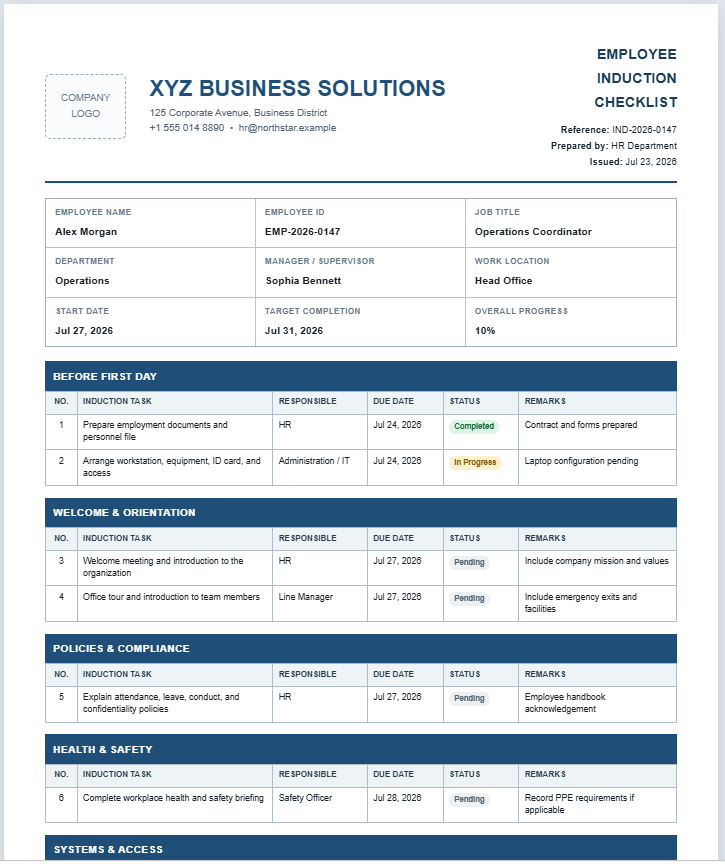
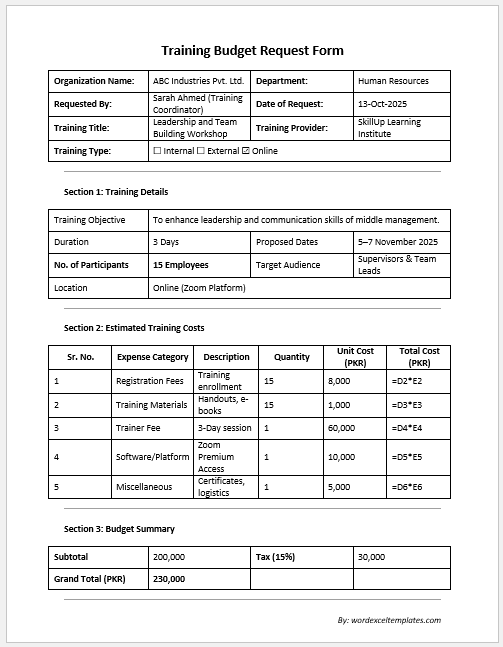
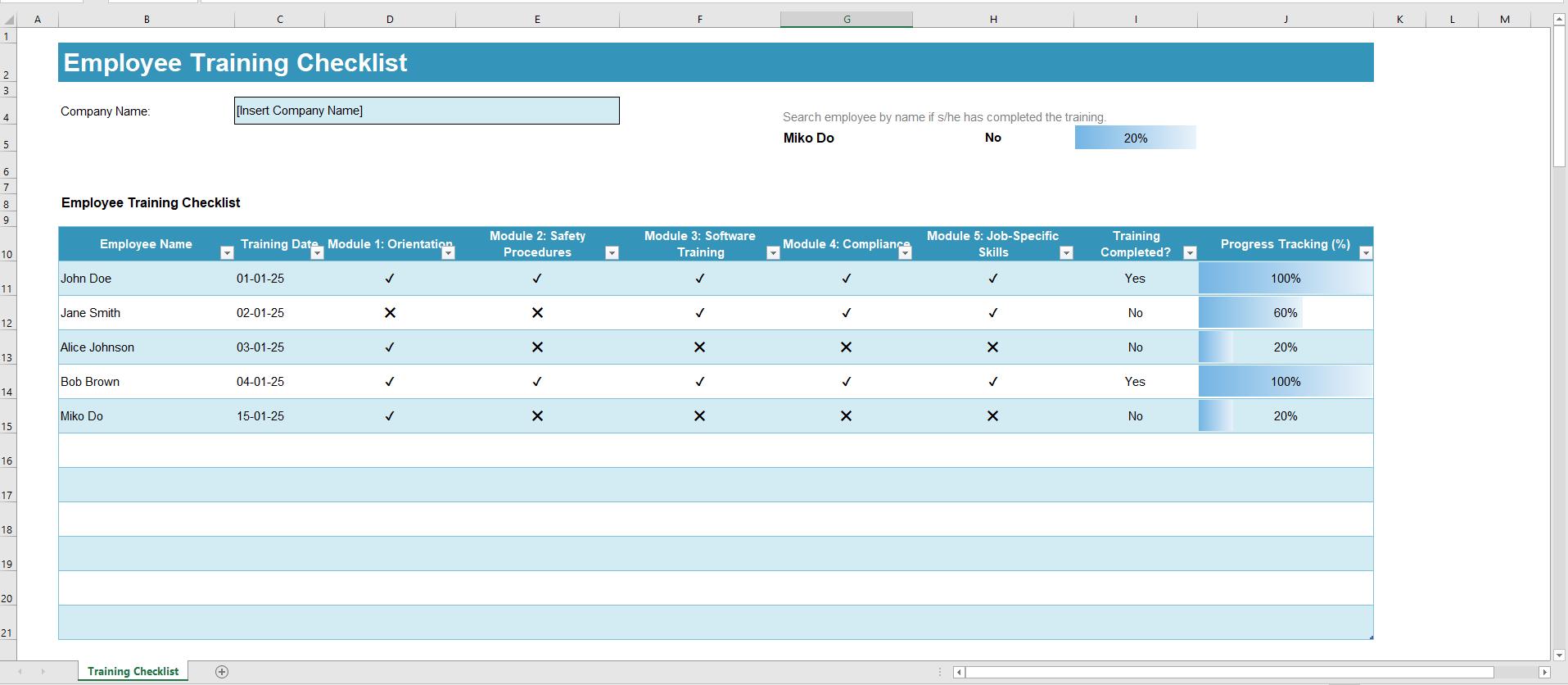
Our Employee Training Checklist Template is designed to help organizations easily manage and track employee training activities in an organized manner. It provides a ready-to-use layout that saves time and ensures consistency across all training records.
The template includes clearly defined sections for employee details, training programs, schedules, training methods, objectives, and completion tracking. It is fully customizable, making it suitable for businesses of all sizes and industries.
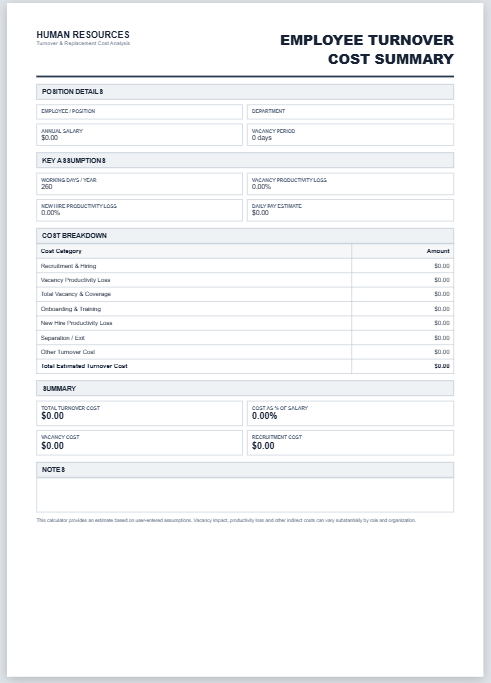
- Employee Turnover Cost Calculator
- Employee Absence Cost Calculator
- Employee Overtime Cost Calculator
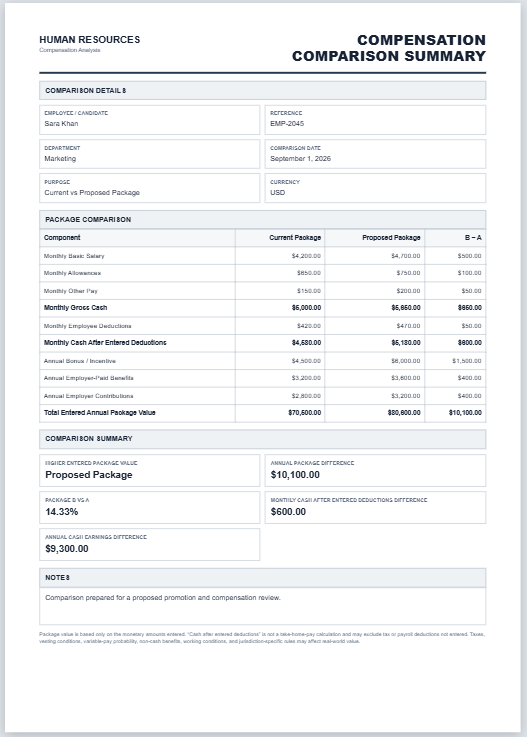
- Employee Compensation Comparison Calculator
- Employee Cost to Company (CTC) Calculator
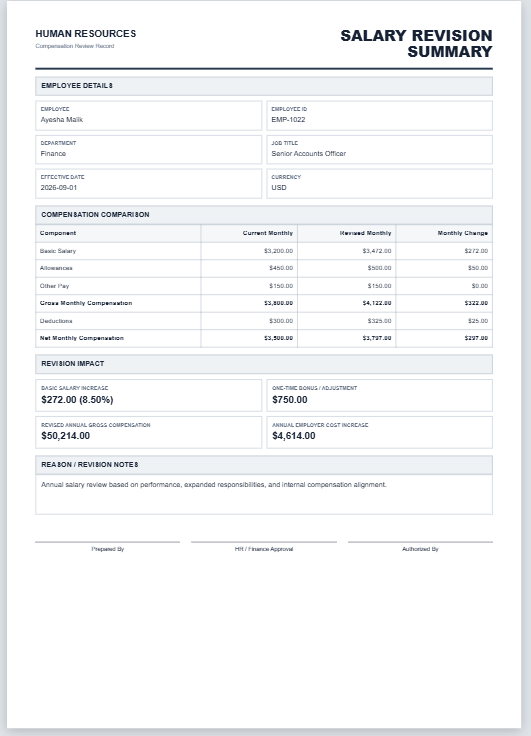
- Employee Salary Revision & Increment Calculator
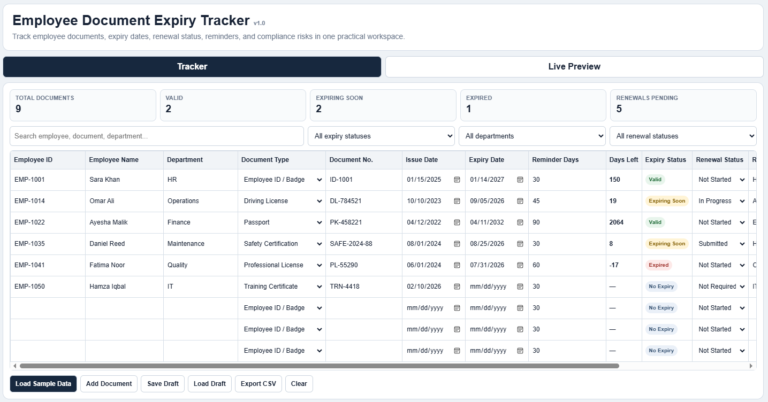
- Employee Document Expiry Tracker
- Stock Transfer Register
- Quotation Register
- Customer Order Tracker
- AI Spreadsheet Builder
- AI Form Builder
- AI SOP Generator
- AI Business Document Generator
- Character Reference Letter Generator