Return to Work Forms

Workplaces can sometimes pose risks to employees, particularly in roles that involve physical tasks or demanding conditions. In such environments, work-related injuries or illnesses may occur, requiring the employee to take time off to rest, recover, and receive appropriate medical treatment.

Once the recovery period is complete, the employee may be ready to resume work. At this stage, it is important to formally communicate their readiness and any limitations to the employer. This is where Return-to-Work forms play a vital role.

These forms help the employee confirm their ability to return to work, outline any medical restrictions, and ensure that appropriate arrangements or accommodations are in place. By using these forms, both the employer and employee can work together to ensure a safe, smooth, and well-documented return to the workplace.

What is a Return to Work Form?

It is a form used by employees to inform their employer that they are ready to return to work and can perform their job duties safely. The form may be used for self-declaration or as supporting documentation during return-to-work interviews.

It provides important details about the employee’s health status, work capability, and any limitations, enabling employers to assess readiness and ensure a safe and appropriate return to the workplace.

Who Uses the Return-to-Work Form?

Return-to-work forms are primarily used by employees, managers, and HR personnel to facilitate a smooth and safe transition back to work after an absence due to illness or injury.

Employees complete the form to provide accurate information about their health status, absence details, and readiness to resume work. This helps ensure that they can return safely and perform their duties effectively.

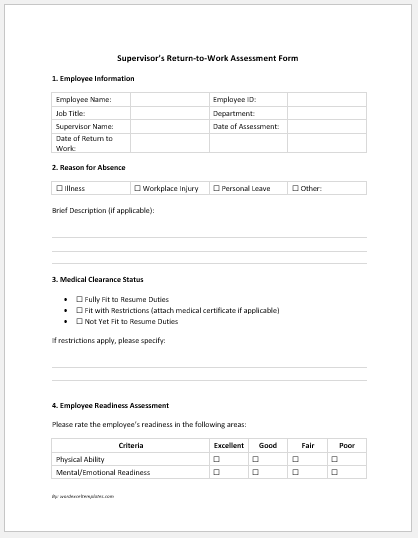
In many cases, the form is reviewed or completed jointly during a return-to-work interview with a manager or supervisor. This allows both parties to discuss any limitations, required support, or workplace adjustments.

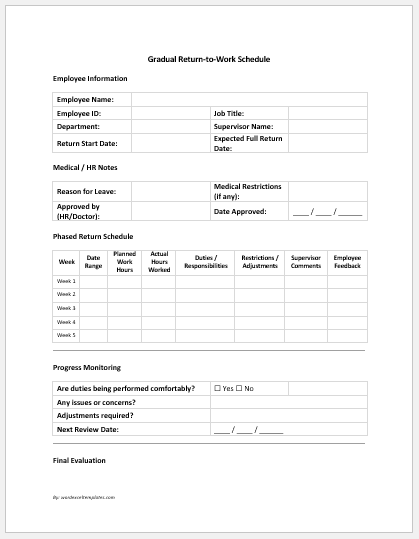
The form also assists employers in planning the employee’s reintegration into the workplace, whether through full duties or a modified work arrangement, ensuring a safe, structured, and efficient return-to-work process.

Benefits of Using Return-to-Work Forms

Return-to-work forms play an important role in ensuring a smooth and safe transition for employees returning after an absence. Below are some key benefits of using these forms:

Provides Clear Details of Absence

These forms allow employees to clearly communicate the reason for their absence, along with the start and end dates. By documenting this information, employers gain a complete and accurate understanding of the situation, helping maintain transparency and proper records.

Helps Identify Non-Genuine Absences

Return-to-work forms enable organizations to track absence patterns over time. This helps identify frequent or potentially non-genuine absences and ensures that attendance records are accurate. Knowing that absences are formally recorded also encourages employees to be more responsible.

Supports Workplace Adjustments

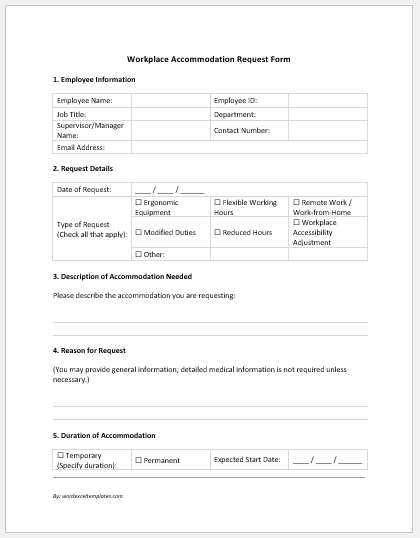
The forms help employers identify any adjustments or accommodations required for the employee’s return, such as modified duties, reduced hours, or special support. They also provide an opportunity to update employees on any changes that occurred during their absence.

Encourages Communication and Planning

Return-to-work forms create a structured way for both the employer and employee to discuss and agree on a suitable return plan. This ensures that the employee can resume work effectively without unnecessary challenges or risks.

Ensures Proper Documentation

Using these forms ensures that the entire return-to-work process is formally documented. This promotes professionalism, consistency, and accountability within the organization.

Acts as a Reliable Record or Proof

Completed forms are stored as part of employee records and can be used as evidence if needed in the future. In case of disputes or misunderstandings regarding absence or return dates, these documents provide clear and reliable proof.

Improves Workplace Compliance and Safety

Maintaining proper return-to-work documentation helps organizations comply with internal policies and legal requirements, while also ensuring that employees return to work safely.

Overall, return-to-work forms help organizations manage absences effectively, support employees during reintegration, and maintain accurate and professional records.

Template Utility

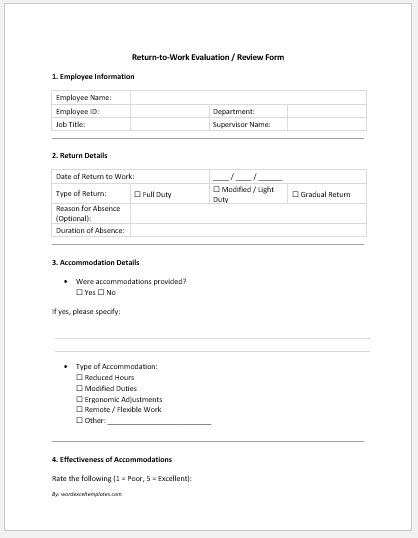
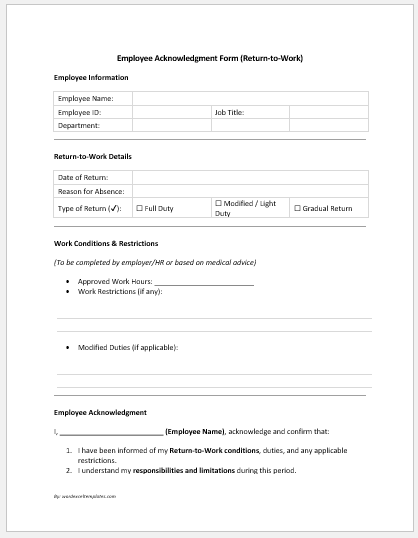
We have drafted all the essential Return-to-Work forms, such as Employee Self-Declaration Forms, Return-to-Work Clearance Forms, Modified Duty Agreements, and more. Each form comes with an MS Word editable feature, which means they are fully customizable to suit your organization’s specific needs.

You can easily fill in details, adjust fields, or modify layouts as required. Best of all, these forms are available for free download from our website, providing a convenient and professional solution to manage your employees’ safe return to work.

Here we have…

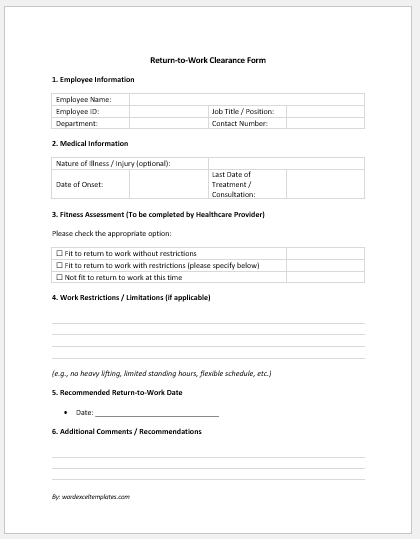
Return-to-Work Clearance Form

Return to Work Clearance Form
No. of Pages = 2

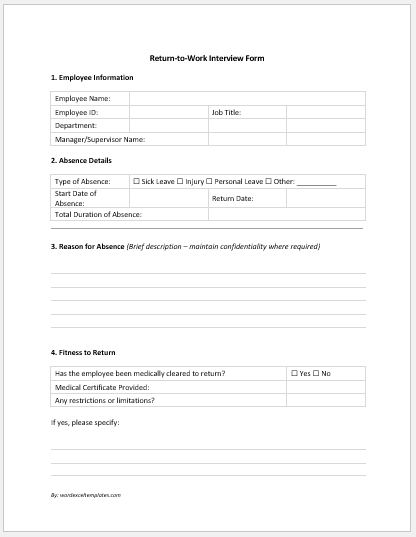
Return-to-Work Interview Form

Return to Work Interview Form
No. of Pages = 3

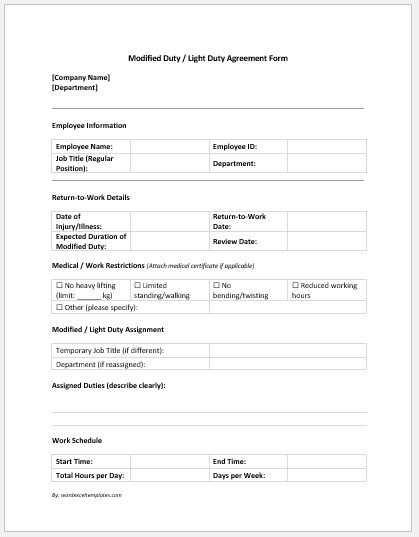
Modified Duty / Light Duty Agreement Form

Modified Duty / Light Duty Agreement Form
No. of Pages = 2

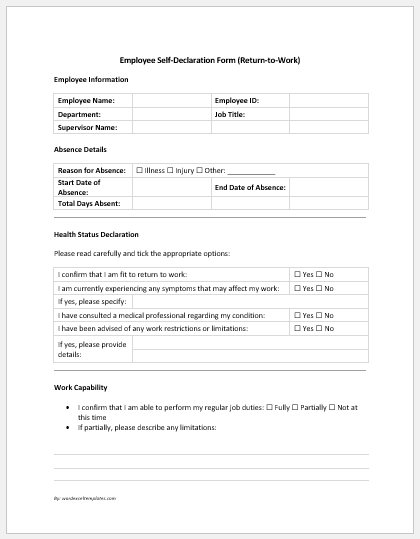
Employee Self-Declaration Form (Return-to-Work)

Employee Self-Declaration Form (Return-to-Work)
No. of Pages = 2

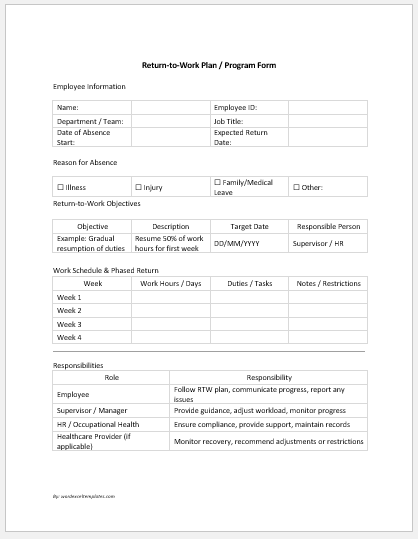
Return-to-Work Plan / Program Form

Return-to-Work Plan / Program Form
No. of Pages = 2

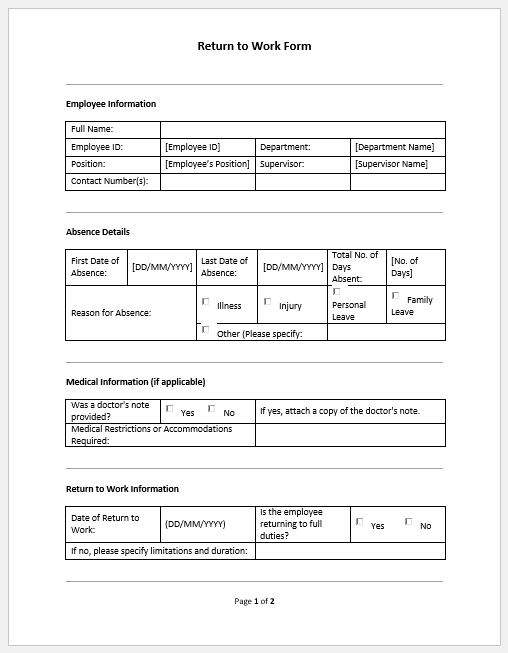
Return to Work Form

Return to Work Form File: 73 KB
No. of Pages = 2